






In this episode, Becky interviews podcast growth expert Traci DeForge, founder of Produce Your Podcast, to uncover simple but powerful methods podcasters can use to boost visibility, improve discoverability, and grow their shows—without spending a lot of money. From optimizing podcast settings to repurposing content strategically, this conversation is packed with actionable tips podcasters can implement today.
🔑 What We Discussed
- The biggest overlooked growth blockers
Why outdated podcast settings, categories, and short show descriptions can dramatically limit discoverability—and how to fix them. - Optimizing your show description for SEO + AI
How to use all 3,000–3,500 characters to improve search visibility and why updating it every 90 days matters. - Why you should revisit categories & author tags
Ensuring your show and episodes appear in searches on Apple, Spotify, and AI platforms. - Using guest names strategically
Adding guest names to author tags to tap into their search traffic. - How to repurpose your back catalog effectively
“Fan favorites,” encore episodes, montage/mashup episodes for vacations or busy seasons. - The importance of being a podcast guest
How guesting on other shows expands your reach—and how to repurpose those appearances in your own content. - Show notes that actually grow your audience
Using timestamps, takeaways, resource links, and optimized titles to increase SEO and AI discoverability. - Choosing the right hosting platform
Why integrations and distribution automations save time, money, and headaches. - YouTube’s growing importance for podcasts
Why creators should post video versions and Shorts, and how to link Shorts to full episodes for maximum reach. - Release-frequency strategy
How often you really need to publish episodes—and how to stay consistent without burning out.
About Traci DeForge:
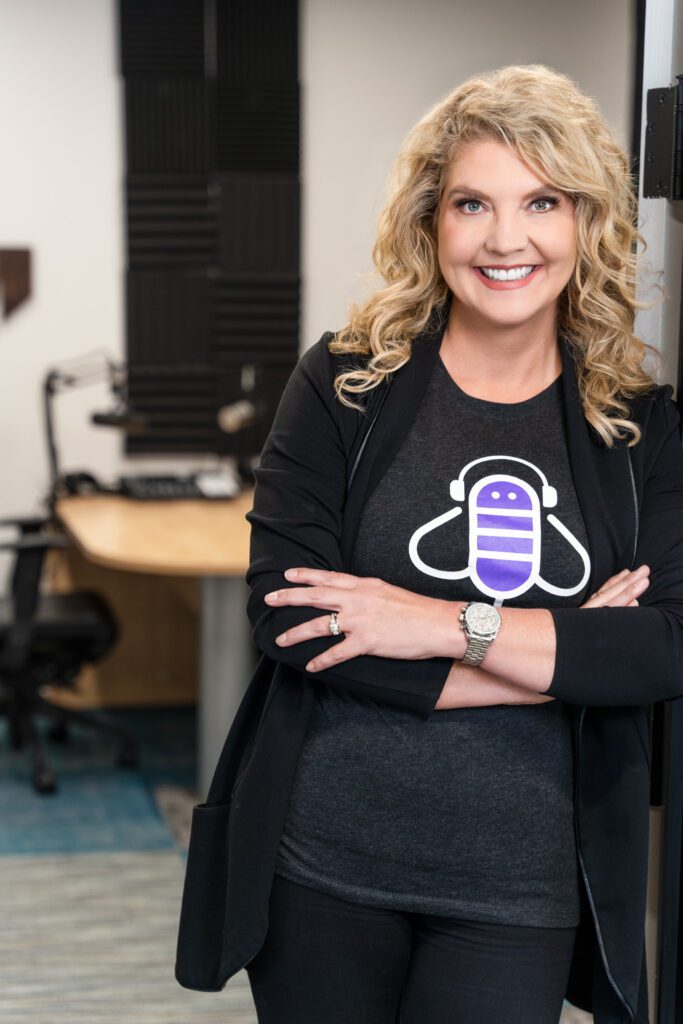
Traci DeForge, founder of Produce Your Podcast, an award-winning full-service production and audience growth marketing agency, is recognized as an international podcast expert, sought-after speaker, and media contributor. The creator of the Podcast Management Academy, the industry’s only certified podcast manager training program, PodHive, and Co-Founder of the Podcast Professionals Association. Traci is the co-host of Ask Brien Radio Show on KHTS AM & FM, Los Angeles, CA. She’s been featured on all three major networks, including CNN, CTV, American Express Open, and RadioINK. She is also a member of the Rolling Stone Culture Council.
AI-Created Podcast Transcript:
Becky Beach: Hey, welcome to the Becky Beach Show! I’m Becky Beach. And today’s guest is Tracy DeForge. She’s the owner and founder of Produce Your Podcast. Welcome, Tracy.
Traci DeForge: Hey, Becky. Great to be here. Thanks for having me on today.
Becky Beach: Oh, yeah. I’m so excited to get to speak with Tracy today. She’s an expert when it comes to podcast growth and visibility.
Becky Beach: So Tracy, we’re gonna be talking about today, is how we could have low income tactics. And are high impact for growing a podcast and getting it noticed. So could you tell our listeners some low cost high about high impact tactics? They, they could use?
Traci DeForge: Sure. So one of the things that producer podcast is known for, we, we typically work with business owners who are leveraging their podcasts to grow their businesses, and people will come to us.
Traci DeForge: We’ve been doing this now for 10 years, and we were really focused on how can we help creators grow their shows Because, good quality production is something that’s really important. But then what? Right. So a lot of times when businesses will come to us, they’re experiencing like a stagnant, their podcast is maybe reached a certain level, it hasn’t grown any further, and they’re like, what now?
Traci DeForge: So one of the first things we will do during a podcast audit, for example, is we’ll identify some of those barriers to growth. One of the very first things that we notice is that they may have launched their show. Maybe a year ago or three years ago, five years ago, and they just never went back and looked at their podcast settings.
Traci DeForge: So I mean, this is like a literally no cost free thing that you could do today that could actually break some of your audience growth barriers. You can look at the backend of your. , hosting platform where you host your podcast and you can check your show settings. Are they aligned now with the content of the podcast that you’re putting out?
Traci DeForge: Maybe when you launched the show, you were thinking I was gonna talk about one specific thing, and maybe the show has evolved and grown, but the categories were never revisited when you set it up. And another thing that’s really, really important is that a lot of times people will look, , and they’ll launch their show with a show description that might be only two or three sentences long.
Traci DeForge: Maybe it’s only a hundred fifty, two hundred fifty characters, which is fine for how the platforms will truncate the data. But what people don’t really realize is that you could have 3000, 3,500 characters of space in your show description. And you can utilize all of that. And so it’s one of the things I guess that I wanna just say to everybody is that your podcast is not a set it and forget it.
Traci DeForge: It’s something that you can go back to, something that you can revisit in terms of your show settings and your show description and make sure they’re optimized for what’s currently going on with SEO.
Becky Beach: Oh yes. Love that. Yeah. I’m trying to log into my bus sprout. ’cause you said there’s analytics because that’s, that’s where my, my podcast is currently hosted.
Becky Beach: So you said if you log into your, your podcast host, you can find analytics there. I’ve never, never done that before.
Traci DeForge: Yeah, so one of the things that you wanna look for as you’re logging in, we’ll do a little workshop in real time here, is how is your show set up in terms of the categories that it’s set up.
Traci DeForge: So some hosting platforms will let you have, , two, sometimes three primary categories. So maybe you’re in society and culture, personal relationships, business marketing. So you just wanna make sure that your show is set so that when someone is searching for your show. That they’re, you’re in the categories and sh will show up.
Traci DeForge: But even more importantly, take a look at that show description while you’re in there and see, Hey, how, how long is my show description? Did I just use like two or three sentences or . Did I take advantage of all 3000, 3,500 characters? Because you can put your bio, you can put links to your website, you could, , especially if your show is matured and you’re into a hundred, 200 episodes, you might have guests that you wanna go in.
Traci DeForge: Put it back into your show description so you can highlight, we maybe didn’t interview those guests when you very first started out, but those are some names that people might search for a podcast of, , what podcast of Tracy De Forge been on. And if my name is in your show description, that episode is more likely to show up.
Traci DeForge: So you just wanna really think about that. You don’t always just have to have it. You could refresh your show description every 90 days, every six months. That’s gonna really help you with AI visibility. A lot of people are talking about the differences now between showing up in Google versus showing up in ai, and the more frequently you’re showing up on podcasts, which again, if you wanna engage in a podcast booking service, engage with someone to put you on podcasts, that’s not necessarily free, but a really wise investment.
Traci DeForge: But if you are just using your own time to show up and and be on podcasts. That’s a low cost alternative, but it gives you more visibility in, in similar audiences that might be interested in doing business with you.
Becky Beach: Oh yeah. I’m looking at the stats right now and I see what the top episodes are, and they’re mostly online, digital product creation.
Becky Beach: ’cause that seems to be what people are interested in when it comes to my podcast. And I do take advantage of the title. I make my title really big. ’cause you don’t just put, put your show name. You should put what it’s about too, right? Like in the same title? Yes.
Traci DeForge: Well, that’s another great, , that’s a great question and a great point.
Traci DeForge: So a lot of times what you wanna be sure of is that your podcast title is something that people might search for. So, and if it’s not an example that I like to use, , like right now we have a show and launch and the show is going, when it launch is going to be. Beyond the bell, but it’s a show that is going to help entrepreneur startups pre, pre IPO, post IPO.
Traci DeForge: So we will put a tagline of sorts, if you will, on the back end of the show settings that will will, that will determine and. An outline that the podcast is a podcast for entrepreneurs pre and post IPO. So that was if someone is searching for a podcast about going public or taking your business public .
Traci DeForge: Then you’re gonna be more likely to show up. They may not search for beyond the bell. That’s really important if you’re focused on the Apple and Spotify platforms, especially Apple specifically. We’ll, , you’ll be discovered in Apple specifically by the name of your show and the author tag, so you also wanna be sure.
Traci DeForge: That your author tag is current with your name as the host. . And if you have a co-host, and then every time you upload an episode, you also, this is a, another growth barrier that you can break through. You wanna put the guest name in the author tag also. So like when you upload this episode, for example, you wanna put Tracy to forge in the, , author tag so that if someone again searches your episode will come up.
Becky Beach: Oh, what great tips. Yeah. I have been, , putting the, the name of the guest in the episode title and , yeah, you’re right. It does, , help them come up in the search. ’cause , yeah, recently I, I, , like, like I, I had like a kind of a higher profile person, like Alice Seba, she’s very high pro profile marketer, and she was on the podcast, , like last week and I’m already getting a lot of views to the page Yeah.
Becky Beach: Of her name. Yeah. Because she’s really popular.
Traci DeForge: Yeah, it’s very smart. And then one of the other things that you mentioned that I wanted to highlight is you mentioned that you’re looking at your stats and that you are seeing some of your top downloaded episodes. What we often underestimate is that we’re all, obviously having new listeners, new viewers coming in to our.
Traci DeForge: Products are content all the time. So let’s use your example. When you had the high profile guests, they shared that out into their network. You shared it out, it’s showing up in search. Once those new listeners come to your show . Then they’re that episode going forward, right? So if you have three top episodes, let’s say.
Traci DeForge: That maybe were released when you originally started your podcast. You can re-release those and you can put those as fan favorites. You can put an encore in the title, or you can even use those into a funnel if you’re, , I know your audience knows and utilizes and leverages a lot of digital marketing strategies.
Traci DeForge: You can create a funnel, a lead funnel for. People coming to your website and they can, , content from those top episodes or links to those top episodes can be included in that funnel so that you’re continually driving new traffic to some of your back catalog episodes. That’s very efficient.
Becky Beach: Oh, I just love that idea.
Becky Beach: That way you’re not having to create content all the time. Like one of you’re really busy. ’cause recently I had. A dental problem and I talked to you about before the, the episode, , and, and one if that week I couldn’t do any episodes. ’cause you can’t really speak when you’re mouth full of gauze and you’re trying to heal.
Traci DeForge: Yeah. Well, and life happens. So you have a life event like that that’s debilitating to your literal voice, or you just wanna go on vacation or spend some time with your kids over the summer. There was a, a lot of, , buzz around, , in 2024, especially for some reason we made a joke on our team. We’re like, did everybody get a memo that they wanted to take the summer off for their podcast?
Traci DeForge: And we didn’t get the memo Uhhuh. But what we, but what we wanted to encourage people to do is like, you don’t have to take the. Summer off from releasing episodes, but you can take the summer off from creating content, which is really where the heavy lift comes in. So what you wanna do in that case, whether like the holidays could be coming up or summer, , whenever you’re watching this episode or listening to this episode, you could be coming up against a holiday schedule or your kids being outta school.
Traci DeForge: That’s when you really can rely on that back catalog to release those fan favorites. You can communicate to your audience and say. Hey, for the next 10 weeks, I’m gonna release my top 10 episodes of all time. And you can also, one of the things that we found to be really popular with a lot of our clients was specifically one of our clients’ true fiction projects.
Traci DeForge: She travels a lot, , internationally and so. When she is traveling, she will create what we call mashups or montage episodes. So we will take some of her, , two or three of her episodes that have similar content, and then we will create a montage and we will release those because you’re constantly introducing new content to a new audience.
Traci DeForge: It’s new to them, but you don’t have to do that heavy lift.
Becky Beach: Oh, that’s such a great idea. Yeah. If there ever in that situation, I, I definitely wanna be trying that. Like, lately I’ve just been trying to get one out, like once a week. Like, what, what do you send to people? They’re, they’re thinking about how, how much, , I should release.
Becky Beach: Is it like once a week or like twice a week? There’s some people that do, do twice a week. Like Amy Porterfield, she releases Tuesdays and Thursdays.
Traci DeForge: Sure. So I think what you really have to determine is what is your why for the podcast and why would you, well, your release frequency is really connected back to why are you doing the podcast?
Traci DeForge: If you have a really good, , funnel of guests and you wanna get a lot of content out there, and you have the bandwidth and the time and the resources to do that, you’re gonna serve up those algorithms by frequent releases. However, not everybody has an opportunity to do that. So what we recommend is at least one really good solid release once per month at an absolute minimum, a bimonthly release is more optimal.
Traci DeForge: But then look at what you’re doing in those weeks in between. Can you integrate a special segment of content? So for example, if you were to repurpose this episode, maybe you release this in its entirety. Maybe a couple months from now, you take this episode and you just edit it down and it, these, the top tips that you love that I give in this particular episode.
Traci DeForge: You maybe make a shorter episode and release that in off weeks, or one of the things that we do on my podcast, which is the Growth Accelerator podcast. We do long form guest conversation interviews, like what we’re having right now. . But since I frequently guest on a lot of podcasts, I’ll also do a solo episode where we’ll take excerpts of podcasts that I’ve been a guest on and I will narrate the tips around it.
Traci DeForge: So I wouldn’t be surprised, Becky, if you don’t show up on one of the Growth Accelerator, but
Becky Beach: Oh, that’s a great idea.
Traci DeForge: But what that does is it gives, it gives your audience a fresh perspective. It invites the, , and introduces my audience to you as you’ve introduced me to your audience. But from an efficient cost per, , low cost provider perspective, it’s repurposing content that you presented to your audience, but is fresh and new to my audience with a very minimal editing, very minimal time investment on my part.
Becky Beach: Yeah, I just love the idea of actually taking content from other episodes you’ve been on. So you just ask them for the, their recording or, or do you just take it yourself? Do you have to ask for permission? I’m sure.
Traci DeForge: Yeah. I mean, you, most people are very excited to have their content repurposed and introduced to another audience outside of just, , you always wanna promote.
Traci DeForge: Like, we will obviously be very excited to promote this appearance in its own way, but then later when we’re doing a. Podcast episode around growth tips, which is really what the Growth Accelerator podcast is all about. This will be a really great episode that we could extract content from put out to my audience, and then you get the benefit of that visibility in front of my audience.
Becky Beach: Oh, that’s such a great idea. I really like that. Like I never would’ve thought thought of that. Yeah. So now I’m looking here more of the stats than I see. The apps and devices, like where, where should you have your podcast at? Does it, you have it at all the places, right? Or, or does it matter?
Traci DeForge: So it, it really does matter.
Traci DeForge: And probably if we kind of back up one step above that, if, especially if you’re listening or watching the show right now and you’re thinking about launching your podcast, , where you choose to host your podcast is a critical decision. So I think you mentioned that you’re hosting on Buzzsprout, which is a great platform.
Traci DeForge: They have automatic connections to a lot of different platforms like Apple, Spotify, integrations with iHeart. So when you are considering. What platform you want to launch your podcast on. You wanna take a look at what integrations are available to you at no additional cost, because that is something that saves you time.
Traci DeForge: And if it saves you time, it saves you money. So a lot of platforms, you can upload it one time to the. The platform like Buzz Sprout, like Captivate Lipsy, and then that will automatically distribute your episode to multiple different places for people to find you. So it’s really good to be discovered where people listen to their favorite, , podcast and it’s just also efficient because you don’t have to manually upload and make those connections every time you upload a podcast episode.
Becky Beach: Oh yeah. That’s really cool. Yeah, I do have it. Yeah, they just natively integrated in all these different places. I didn’t have to do much, and I also put my podcast on YouTube. Like what? What’s the benefit of that, like posting your podcast as a video or short on YouTube?
Traci DeForge: With YouTube right now is that, , like I said, producer podcast, we’ve been doing this now for 10 years, and so I’ve seen the industry really dynamically shift over the last decade.
Traci DeForge: Probably the biggest shift I’ve seen in the last two years is the, , idea around video podcast needing video to grow your show and the presence that YouTube has essentially created and the platform that they’ve created. That is o that has led to it not being just a nice to have video, but really a need to have video.
Traci DeForge: Like I, I know before we started recording the show, you asked me if I was okay with video and I’m like, yeah, I’m totally okay with it because you really need the YouTube component right now. To make sure your show is discovered by people who are consuming podcast content on YouTube. It is the second largest search engine owned by the first largest search engine, right?
Traci DeForge: And that in itself is a discoverability tool, but it’s also the second, , largest, , podcast consumption platform. And really quickly, depending on what surveys and what data you look like. And a lot of cases can be the first. So did, does that mean that you have to have a fully edited, professionally edited video every time you release an episode?
Traci DeForge: No, but what it does mean is that you need to integrate some video into your channel as well as using the clips. For shorts and making sure that those shorts, , the video shorts are linked back to the full episode. That’s a piece that a lot of people miss. They’ll upload the episode to YouTube. They’ll upload their shorts to YouTube.
Traci DeForge: They’ll get like. Maybe 10 x more views on their shorts than they do on their actual episode. But the opportunity was really missed because on the backend, when they uploaded the shorts, they didn’t tag it properly or connect it back and link it back to the full episode. So they missed out on the possibility of of introducing their long form content to all whole new audience.
Becky Beach: Yeah, that is like, yeah, it is just really thought Pro Book. I’m sure everybody listening is like, wow, like, like how could I, I get started, , doing this. Like, is it hard to help podcast? Like, what? What do you think?
Traci DeForge: I think that it’s not difficult to have a podcast. What’s difficult is to sustain a podcast, and so that’s why it’s really important when you are launching a podcast to really look at the foundational pillars and make sure everything is set up for growth and to make sure what you’re setting up for yourself is sustainable.
Traci DeForge: So. Aspirationally, do you wanna get to release one a week every week for 52 weeks? Yes. I mean, that would be amazing. But look at your schedule. Look at the time you can spend towards it. Look at whether or not you are able to invest in a partner to support you with that, and then make that decision.
Traci DeForge: Because it’s a lot easier to start with one to two episodes a month and then add to it. Then it is to set that expectation with your audience that you’re gonna release once or twice a week, and then not be able to sustain that and then have that fade away. So, , we talked about the importance if you’re launching a podcast, to really evaluate your hosting platform partner, that’s very important.
Traci DeForge: And secondly, it’s also very important to establish your own bandwidth, your own time, how many resources you can allocate to it, and then three. Be sure that once you’re investing the time and energy and focus into creating this content, that you repurpose it and use it in other areas of your marketing strategy, because that’s really how the show will grow.
Traci DeForge: And I know you’re really great at doing that by having creating clips and , repurposing content in other areas once you record the episode, I think you do a great job of that. Becky.
Becky Beach: Oh, thank you. Yeah, I always believe in having like multiple uses for your content. ’cause I’ll, I’ll spend just an hour with you today and then I got content for like a transcript.
Becky Beach: I use desk script to transcribe the podcast and then I put that on my blog and then I go about, using OpusClip.ai and I’ll have links to all these , programs I’m mentioned in the show notes BeckyBeachShow.com. And I go there and then I make little clips and then it will actually rank your clip.
Becky Beach: ’cause , based on what, what we’ve talked about thus far, it will rank what we’ve spoken about and then it’ll rank, rank the clips in order to, or be like 99% is the best, , all the way down to 1%. And I’ll put the nine nine and like 98% clips on all my social media, like the Instagram shorts and Instagram reels and YouTube shorts and all that.
Becky Beach: So it can really give you a lot, a lot of life for your content.
Traci DeForge: Yeah, definitely.
Becky Beach: This has, has been great. So do you, do you have any, any more tips on how, like, how someone could grow that they probably haven’t thought of?
Traci DeForge: Oh, oh, I’m full of tips on how you could grow that you may not have thought of. , I think what we, , what, what we were talking about earlier is when, when you show up on other people’s podcast outside of your own podcast, that’s something that, , can, sometimes the value of that can be underestimated.
Traci DeForge: But I’m a big advocate for not only. Blocking time in your calendar to create your own content, but as part of that content creation, blocking time in your calendar to make appearances on other shows who may have similar audiences or, or audiences who could be interested in doing business with you. So I think.
Traci DeForge: That’s definitely, , number one, because then like you said, you repurpose the content from your own podcast, but as we discussed earlier, then you can repurpose the content from guesting on other shows as well. So that’s a double win. And then the second thing is that. Really, , take the time to focus on your show notes.
Traci DeForge: You mentioned that you are gonna be putting links in your show notes. That is something that gets misunderstood by a lot of content creators. They think it’s a, it’s a place they can take a shortcut. They think it’s a place that, , that they can just throw together or put one or two sentences up. But the show summary.
Traci DeForge: Is the most content rich from an discovery and an SEO optimization standpoint? 99% of the time when we do a podcast audit, that’s the area where we find that there’s the biggest, just enormous opportunity for audience growth. By just optimizing your show notes, which means optimizing your title, optimizing your episode description, and then making those show notes have timestamps, key takeaways.
Traci DeForge: . Resource links, bios of the guest, all of these things that are just a den for podcast specific SEO. And I think that’s also something that gets misunderstood a lot, is that podcasting has its own set of SEO. So as a company. Produce your podcasts, invest in three separate but significant tech stacks that allow us to optimize specifically for podcast SEO.
Traci DeForge: And when we are able to do that for our clients, we can see in within two to three weeks, an 80% increase sometimes in downloads just by breaking that one growth barrier.
Becky Beach: Oh, that’s such a great idea. Well, I’m gonna share my screen and show my, , pi my podcast page, , when I do my transcript. Oh,
Traci DeForge: I love, I love a live workshop.
Becky Beach: Yeah. Yeah. Tho those on, , YouTube will be able to see it because I do post my podcast on YouTube if you’re just li listening the audio alone. So you may wanna head over to my YouTube channel. It’s, , it’ll be in the show notes. Yeah. So, so this is, , like my podcast. Page that I do for everybody. All the episodes I put, like the number and the title, and I put what the title is up here that I have a, like a summary and then I, I put where their websites are like, like this is Alice SBA last week.
Becky Beach: She’s the founder of nmu and Eki Hub University. So I’m talking about her and then I give her freebie. So this is a way to, someone could, , get on her email list and then I put an embed of the podcast. They can actually listen to it here.
Traci DeForge: Yeah. So are you open
Becky Beach: for some
Traci DeForge: feedback?
Becky Beach: Oh yeah. Yes. I’m hoping that you’ll, you’ll like, gimme some feedback on this, how I get better.
Traci DeForge: Yeah. Great. Okay, so the first thing I would recommend is moving the embed player above the to, to the top, underneath the title. Okay. So when the user goes to your page, the first thing that they see is the opportunity to actually play the episode. Because if they click that and they play that for at least 60 seconds or more, I mean, obviously you want them to engage longer, but at least 60 seconds, that’s gonna count as a download.
Traci DeForge: And then secondly, because AI has become so important. In discovery, one of the things that you would wanna integrate into your podcast show notes is what will I learn from this episode? So if there are three or four specific bullet points that you and Alice spoke about in terms of high converting sales pages, if there’s three or four.
Traci DeForge: Things that someone who listens or watches the episode can learn from. Then highlight that in specific bullet points, because then when someone goes into chat GPT and they position it, the question about what is the best way to create a high converting sales page, then you’re more likely to show up in AI because you have designated the different bullet points and then.
Traci DeForge: , a third point that I would suggest in here is to take some of that content and put key takeaways or, , or what, what will I learn or what you’ll learn from this episode. And then three or four timestamps. So. The, that you could put your timestamps in. And then again, it would say the very specific things that are talked about at different points in the episode.
Traci DeForge: But those, again, are gonna really serve up the ai, the chat GPTs, the quads, the AI platforms, because those are likely going to be, , points that people may be. Asking questions about in the AI platform. So if you were to just make a couple of those tweaks by moving up the, , embed player Uhhuh by highlighting what someone will learn, and then putting two or three timestamps, you’re gonna absolutely, , be better optimized for search.
Becky Beach: Oh, that’s a great idea. So then I, I put her, her bio here, and then this is the transcripts and I try to clean it up. ’cause sometimes it gives a mess. So I try to look through here and it, it puts like times, timestamps, like
Traci DeForge: yeah.
Becky Beach: Script. So I try, but I
Traci DeForge: think, , you could even extract some of those timestamps out of that transcription if you’re putting the time into doing that.
Traci DeForge: But. What, , Google really loves the show notes. , they, they like the transcript and that’s a good thing to do, but it’s better to spend your time in actually creating content versus the transcript because they’ll recognize that, , in a more swift way.
Becky Beach: Oh, oh, okay. That’s, that’s a pretty cool insight.
Becky Beach: And this is the actual podcast page ’cause I direct ’em to becky beat show.com. So they see this and they show them places they can listen to it. Then I kind of talk about what it’s about, how to watch it on YouTube, and these are the episodes they can just flip through here and listen to new episodes.
Traci DeForge: Yeah. That’s amazing. Well, and one thing I wanted to point out that I thought, , you did really, really well, that a lot of content creators, , actually miss a big opportunity on, which is when we very first started doing this exercise. You very, you made a very specific point that if you’re listening to the show, you may not be able to see these website screenshots that we’re talking about.
Traci DeForge: , so you guided people if you were listening to go to the YouTube to actually view it where that is. , something that makes a listener feel very included in the conversation Yeah. Versus excluded. And I love to cite this example because most everybody, if you, if you are or you aren’t, a Taylor Swift fan, you probably heard about her making a podcast appearance on the New Heights podcast.
Traci DeForge: If you watched it, then you had a fabulous experience because she debuted the life of the Showgirl album, art on the podcast. But if you were listening to the podcast, she’s not a typical podcast content. She’s an amazing content creator, amazing business woman, but never appears on podcast. So she didn’t have the insight to know.
Traci DeForge: That if you’re listening to that podcast, you as a listener, were not, inclu did not feel included because there was no description of what that album cover looked like. So if you wanna see the difference between what you just did, which was a plus plus, oh thanks. Versus how what not to do. There’s very few things in, in Taylor Swift’s world.
Traci DeForge: You can say what not to do, but that one was a miss.
Becky Beach: Oh yeah. Better than Taylor Swift just playing.
Traci DeForge: Right. And now, now we’re gonna come back to another workshop moment. Now that we’ve mentioned Taylor Swift. In this episode, I just gave you a great opportunity to have in the resource links of your show notes if you add a section.
Traci DeForge: Called resource links if somebody mentions a movie, a book, or their own products and services. But we mentioned her album and we mentioned their podcast. So now you can hyperlink to that episode of New Heights and to her album on Spotify. And now you have backlinks in your show notes.
Becky Beach: Oh. Oh, that’s a great, I haven’t been putting back links too often.
Becky Beach: Like that’s, that’s a great idea because I do that for my blog. I start off as a blogger. , I’ve been doing this block for 10 years and I didn’t think about doing it in my podcast too. That’s, that’s really a great I idea. So Tracy, where, where can people find you so that they could connect and learn more?
Traci DeForge: Oh, thank you so much for asking. So I very much encourage you to check out produce your podcast.com. We have a lot of blog posts that share some of these tips that are there. You can find other podcast episodes where I’ve appeared and shared tips. And you can set up a free consult call to continue this conversation.
Traci DeForge: If you like the tips that I’m giving and you wanna learn more about how to grow your podcast, or your audience, or your business through a podcast, just go to produce your podcast.com. I would love for you to connect with me.
Becky Beach: Yeah, I’m looking at her, her page here, and she’s a media page, and that’s really smart to do is to put all the different podcasts you had mentioned on.
Becky Beach: ’cause I need to do that because I’ve been mentioned on many podcasts or been on it and I, I haven’t been doing this.
Traci DeForge: Yeah. Well, we’ll be happy to add you, Becky, to our page when the podcast episode comes out.
Becky Beach: Oh, great. And then she has all this artwork too, of each of the episodes. Wow. This has been great.
Becky Beach: Thanks so much again for being here today, Tracy. And make sure you guys go to the show notes@beckybeachshow.com and also Tracy site produce your podcast.com. Well, thanks again. Do you have any last words for today’s listeners?
Traci DeForge: Yes, I would just encourage you if you felt overwhelmed by all of the possibilities we talked about today, just choose three and pick the first one.
Traci DeForge: Have that one be the one that’s the easiest for you. And then just pick three and just start where you are and don’t get overwhelmed because all, any of the changes that you make are gonna help to grow your show. So just start with one. Then add another one, then add another one and continue to build on the momentum that you’re creating.
Traci DeForge: But just don’t get overwhelmed and keep going.
Becky Beach: Oh, that, that was really great. Great advice. I can, I can see people, , getting overwhelmed ’cause we did discuss a lot of amazing tips today. Well again, thanks. Thanks to everybody. Make sure to go to BeckyBeachShow.com. Well have a great day. Goodbye.

